
LocaLuv
MotionMediaSocial
4.2390.00 Reviews
- Version
- 1.1.3
- Installs
- 100.00K
- Age Rating
- Mature 17+
Screenshots
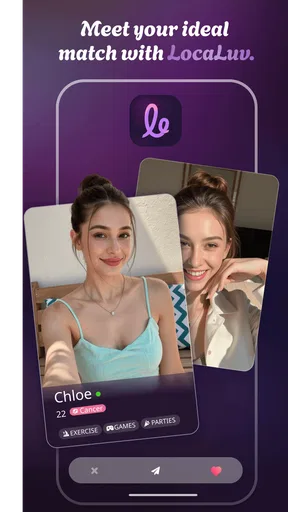
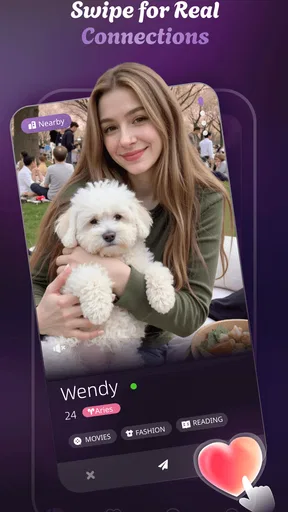



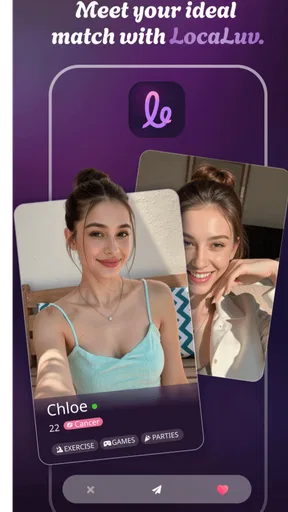
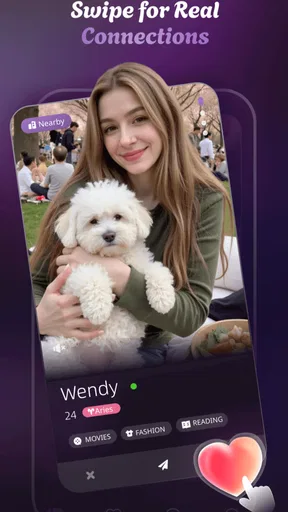

Our Review of LocaLuv
 Analysis by Appyee
Finding someone to talk to is easy in theory and surprisingly awkward in practice. I have used plenty of social apps that promise connection but end up turning conversation into a stream of alerts, half-read profiles, and messages that disappear under constant activity. LocaLuv takes a more focused position as a social app for people looking for a person rather than simply collecting contacts. That difference matters, because the real test is not whether an app can put names on a screen; it is whether it helps two people communicate with enough clarity to decide if continuing is worthwhile.
My experience with it is best understood as a quieter, more deliberate way to begin social contact. It is not a replacement for every messaging service, and it will not remove the uncertainty that comes with meeting someone new. What it can do is give that first exchange a clearer setting. I found myself thinking less about keeping up with a busy feed and more about whether a conversation had a natural rhythm. For anyone tired of social platforms that demand constant attention, that change is the most interesting part of the app.
LocaLuv in everyday use: from first contact to a clearer conversation
I find the most useful way to approach LocaLuv is to treat a first exchange as a small conversation, not a promise of instant connection. I pay attention to whether interest feels mutual and whether I can step away without losing the thread. That mindset makes it easier to decide what a good first contact looks like before considering how to carry it into a clearer conversation.
A social app built around the need for a more personal connection
LocaLuv is developed by MotionMedia and sits in the Social category. Its store summary, “LocaLuv:Find Your Person,” gives a useful clue about its intended purpose without explaining the whole experience. I approached it as a place to look for a meaningful connection, not as a general-purpose network for posting updates or maintaining a large public audience. That distinction shaped how I used it: I paid attention to the quality and direction of exchanges instead of treating every new interaction as a reason to stay online.
The app is free to install, which makes trying its basic experience relatively straightforward. It is rated Mature 17+, so it is aimed at adults and should be approached with the same judgment I would use on any service involving contact with unfamiliar people. In-app purchases range from $3.99 to $49.99 per item. That does not automatically make the app expensive, but it does mean I would spend time understanding what any optional purchase changes before paying. A free starting point is useful; a clear personal limit is even more useful.
One practical advantage is that the app does not require me to make a large social commitment before deciding whether it fits. I can treat the early stage as an evaluation period: notice how comfortable the interaction feels, whether replies are understandable, and whether the other person respects the pace of the exchange. That approach is healthier than assuming every match or message deserves immediate emotional investment.
How the conversation rhythm feels when attention is limited
The strongest part of this kind of app is not the first glance at a profile. It is what happens after the opening message. I found that a conversation becomes easier to judge when I stop expecting instant momentum. A delayed reply is not automatically a rejection, and a fast reply is not automatically a sign of genuine interest. LocaLuv works best when I use it as a space for gradual discovery rather than a test of how quickly someone can respond.
That is especially relevant during an ordinary day. Imagine checking the app during a lunch break, exchanging a few thoughtful messages, then returning to work without feeling obliged to remain available. Later, I can pick up the thread with enough context to continue rather than trying to reconstruct a conversation from a noisy stream. The benefit is not dramatic; it is a small reduction in pressure. Those small reductions often determine whether an app becomes part of a routine or gets deleted after a few days.
I recommend writing messages that give the other person something specific to answer. A short observation or a direct question usually creates a better opening than a vague greeting. I also avoid sending several follow-ups when a reply does not arrive. This is not just etiquette. It protects my own attention and gives me a clearer read on whether the exchange is mutual. An app can provide the setting, but the quality of the rhythm still depends on how both people use it.
Where the app saves attention, and where it may still consume it
Social apps can quietly turn free time into fragmented time. I may open one to answer a message and leave twenty minutes later after checking unrelated activity. The appeal of a person-focused service is that it can narrow the reason for opening the app. When I enter with one conversation in mind, I am less likely to treat the entire platform as an endless task list.
That focus has a trade-off. If I am actively looking for new connections, I can still fall into repetitive checking: open the app, look for a response, close it, then repeat the same action later. LocaLuv does not solve that habit by itself. My most useful adjustment was to decide when I would check messages instead of reacting to every possible interruption. Even without making the app a strict schedule, setting a simple boundary—such as checking after work rather than during every quiet moment—keeps the conversation from taking over the day.
Notifications deserve the same attention. I do not want a social app deciding that every new event deserves immediate focus, particularly when I am working, studying, driving, or spending time with someone in person. If the notification settings allow a choice, I would keep only the alerts that help me respond appropriately and silence the rest. If the app becomes difficult to use without constant checking, that is a sign to step back rather than a reason to check more often.
The app’s current version is 1.1.3, and it supports Android 7.0 and later. That broad compatibility is helpful for people using older Android phones, although an older device may not feel as comfortable with any modern social experience as a newer one. I would keep the application updated when possible, both for usability and because social apps benefit from ongoing maintenance. The important point is that compatibility makes it easier to try without needing a recent phone.
Setting boundaries before a conversation becomes uncomfortable
Good communication is not only about finding someone who seems interesting. It is also about recognizing when the pace, subject, or level of personal detail is moving faster than I want. I would not share sensitive information simply because a conversation feels warm. A first exchange can be friendly without earning access to my private routines, workplace details, financial information, or exact location.
My preferred boundary is to keep early conversations general and observe how the other person reacts to a reasonable limit. Someone who accepts “I would rather not discuss that yet” gives me useful information. Someone who pushes, guilt-trips, or repeatedly redirects the conversation toward private details also gives me useful information. In that situation, ending the exchange is more sensible than trying to explain the boundary perfectly.
Location is another area where I would be careful. The name and purpose of the app may encourage local connection, but local interest should not become an invitation to reveal where I live or where I will be at a particular time. If a meeting eventually feels appropriate, I would choose a public place, tell a trusted person where I am going, and arrange my own way home. These steps are not an accusation against every stranger; they are ordinary safeguards for an environment where people may not yet know one another.
I also think about emotional boundaries. A long conversation can create a sense of closeness before there is enough real-world knowledge to support it. I try to separate enjoying a chat from assuming that the person is reliable, compatible, or available in the way I hope. That distinction helps keep the app enjoyable without allowing a promising exchange to control my mood.
What the audience size suggests for a new user
LocaLuv has passed 100K installs and holds a 4.2 average from around 2.8K ratings, alongside roughly 390 written reviews. Those figures suggest an established user base rather than an entirely empty new service, but they should not be read as a guarantee that I will immediately find the right person. Social apps are shaped by location, timing, age, activity, and the kind of connection users want. A healthy-looking overall rating cannot predict the quality of every individual conversation.
I would give the app a fair trial without treating the number of available people as the main measure of success. A smaller pool with better alignment can be more useful than a large pool that encourages endless browsing. If I live outside a heavily populated area or have very specific preferences, the experience may feel slower. In that case, a larger, more established alternative may provide more variety, while LocaLuv may appeal more to someone who values a focused environment over maximum reach.
How it compares with familiar social alternatives
Compared with a general social network, LocaLuv feels more purpose-driven. General networks are useful when I want to follow communities, share public updates, or stay connected with people I already know. They can be too broad for a private first conversation, though, because social identity, public activity, and unrelated content compete for attention. LocaLuv is a better fit when the immediate goal is to explore a personal connection rather than maintain a public presence.
Compared with a mainstream dating service, the difference may be less about a single feature and more about atmosphere. Large dating platforms often offer extensive discovery systems and a much wider audience. That can improve choice, but it can also encourage rapid judgments and a swipe-first mindset. LocaLuv is more appealing to me when I want to slow down and evaluate how someone communicates. If my priority is the largest possible selection or highly detailed filtering, another service may be more efficient.
Compared with ordinary messaging apps, LocaLuv has a different starting point. Messaging tools are excellent once I already know whom I want to contact, but they do not necessarily help with the earlier question of whether a new connection is worth pursuing. I would use a regular messenger for established relationships and consider LocaLuv for the stage before that relationship has a clear shape. Moving to another messenger too quickly can also remove useful distance, so I would wait until trust and comfort have developed.
Small habits that make the experience more useful
The first habit I recommend is to judge consistency rather than intensity. A person who sends a flood of enthusiastic messages and then disappears may be less compatible with my communication style than someone who replies calmly and reliably. Looking at the pattern over several exchanges gives better information than focusing on one unusually exciting conversation.
The second is to keep the first conversation easy to exit. I avoid starting a serious or emotionally demanding exchange when I have no time to finish it. A simple message such as “I need to go now, but I enjoyed this” makes the boundary clear and prevents the app from turning a short break into an obligation. This is particularly useful for people who already feel stretched by work, family, or study.
The third is to use optional spending cautiously. Because purchases can cost from $3.99 to $49.99 per item, I would never buy something merely because the app creates a sense of urgency. I would first decide what outcome I actually want, check whether the purchase supports that outcome, and set a limit before entering payment details. If I cannot explain the benefit in plain language, I would skip it.
A fourth useful practice is to review the conversation after stepping away for a while. When I am caught up in a pleasant exchange, every message can seem more meaningful than it is. Returning later with a calmer mind helps me notice whether questions are balanced, whether my boundaries are respected, and whether I am doing all the work. This pause is one of the simplest ways to protect clarity.
Who should try it, and who should choose another option
I would recommend LocaLuv to an adult who wants to explore a personal connection without making constant public posting the center of the experience. It suits someone who values measured conversation, can tolerate a slower beginning, and is willing to manage notifications and personal boundaries. It may also work well for a person who finds large social platforms distracting and wants a more direct reason to open an app.
I would be less likely to recommend it to someone who needs a very large active audience, extensive discovery controls, or a platform built primarily around public communities. A general network may be better for group interaction, while a larger dating service may be better for rapid browsing and broad reach. I would also suggest skipping it if the idea of communicating with unfamiliar adults feels uncomfortable or if the Mature 17+ setting does not match the intended user.
People who expect an app to guarantee compatibility may also be disappointed. No interface can replace patience, judgment, and mutual effort. The service can make an introduction possible, but it cannot determine whether another person is honest, emotionally available, or respectful. That responsibility remains with the user, which is why the app makes the most sense as a tool for early communication rather than a shortcut to certainty.
My social verdict after using it
LocaLuv’s most convincing quality is the way it encourages me to think about communication pace. Instead of measuring value by how much activity I can consume, I can ask better questions: Is this conversation reciprocal? Do I feel comfortable replying? Can I put the phone down without worrying that I am missing something important? Those questions make the experience more grounded than the usual cycle of checking, reacting, and moving on.
It is not frictionless. The user base may not feel equally active everywhere, optional purchases require restraint, and the app cannot remove the risks involved in talking with strangers. Its success also depends heavily on the behavior of the people I encounter. Still, those limitations do not cancel out its central strength. They simply make it important to use the app intentionally rather than passively.
With a 4.2 average and over 100K installs, it has enough presence to be worth considering, while its free entry point makes a cautious trial practical. I would keep notifications under control, avoid rushing into private details, and judge conversations by steady respect rather than instant excitement. My recommendation is positive for adults seeking a calmer route to personal connection, but only when they are prepared to protect their time, privacy, and emotional boundaries.
Verdict
Strengths of LocaLuv
- Helps discover nearby people with shared interests.
- Location-based matching can make connections feel more relevant.
- Simple interface makes browsing profiles quick and accessible.
- Useful for meeting people outside your usual social circle.
- May support spontaneous local plans and conversations.
Limitations of LocaLuv
- Location access may raise privacy concerns for some users.
- The nearby user pool can be limited outside busy areas.
- Some features may require in-app purchases or subscriptions.
- Profiles and activity levels may vary by location and time.
- As with any social app, users should watch for fake profiles.
Similar Picks in This Category
View All
Meta Platforms, Inc.4.6

Instagram4.0

Likee-Live, Chat & Party Games
Likeme Pte. Ltd.4.4

Facebook Lite
Meta Platforms, Inc.4.5

TikTok - Videos, Shop & LIVE
TikTok Pte. Ltd.4.0

Moj: Free Short Drama & Reels
ShareChat4.1
Frequently Asked Questions
What is LocaLuv and how does it work?
LocaLuv is a location-based social and dating app designed to help users discover and connect with people nearby. After creating a profile, you can browse suggested users, view shared interests and basic information, and decide whether to interact. Depending on the available features, connections may lead to messaging or other in-app communication. Results can vary according to your location and the number of active users nearby.
Is LocaLuv free to download and use?
LocaLuv can generally be downloaded at no cost, but some functions may require in-app purchases or a premium subscription. Free users may have access to profile creation, browsing, or limited interactions, while advanced tools can include additional visibility, unlimited messaging, or enhanced search options. Before subscribing, review the current pricing, renewal terms, and cancellation policy shown in the app store.
Does LocaLuv require access to my location?
Because LocaLuv is built around nearby connections, location access is an important part of its experience. The app may use your approximate or precise location to show relevant profiles and local activity. You can usually manage permission through your phone settings, but restricting access may reduce accuracy or disable location-based features. Check the privacy settings carefully before completing your profile.
Is LocaLuv safe and private to use?
LocaLuv includes common account and reporting tools, but users should still take responsibility for their personal safety. Avoid sharing your home address, financial details, passwords, or sensitive documents with anyone you meet through the app. Use blocking and reporting options when necessary, and arrange first meetings in public places. Also review the privacy policy to understand how profile and location data are handled.
What should I do if I cannot find people near me on LocaLuv?
The number of available profiles depends heavily on your city, selected distance range, age or preference filters, and current user activity. If results are limited, try expanding the search radius, adjusting filters, or checking again later. Make sure location permissions are enabled and that the app has a stable internet connection. In smaller communities, the service may offer fewer active matches than in major cities.
